Click and collect
Order online and pick up in store, which suits bulky goods and customers who want to see the product before taking it home.
Websites and online shops for small furniture, clothing and retail businesses in Portugal, with MB WAY, Multibanco and sales on marketplaces.
Short answer
Rubra Digital builds and runs websites and online shops for small furniture, clothing and retail businesses, usually with fewer than 20 people, including makers who have always sold to other shops. The work covers the shop platform, product pages written to rank, the payments Portuguese customers expect such as MB WAY and Multibanco, click and collect and delivery, listings on marketplaces such as Worten, and the consumer law details online shops have to get right.
Last reviewed
Order online and pick up in store, which suits bulky goods and customers who want to see the product before taking it home.
Delivery areas, minimum order values and free delivery thresholds that match how the business actually delivers and installs.
Unique descriptions, real specifications and structured data, instead of the manufacturer text every other shop uses.
The same catalogue on Worten, KuantoKusta, Fnac or Leroy Merlin, with stock and orders synchronised so nothing is sold twice.
Quote requests for made-to-measure furniture, and a trade area where shops that stock your products can reorder without a phone call.
New ranges, price changes, promotions and seasonal catalogues kept current every month as part of a care plan.
For a local retailer, the website and the shop floor are one business. Most customers browse online before they visit, compare a few products, and then either buy online, reserve for collection, or walk in already knowing what they want. The shop has to support all three.
Many small furniture makers and clothing firms have always sold to other shops or brands. Selling directly, through their own shop and on marketplaces, needs the same basics plus a few of its own: photos and product data good enough for a stranger to buy from, delivery for bulky items, and an invoice for every order. Online shops and marketplaces explains how that is set up.
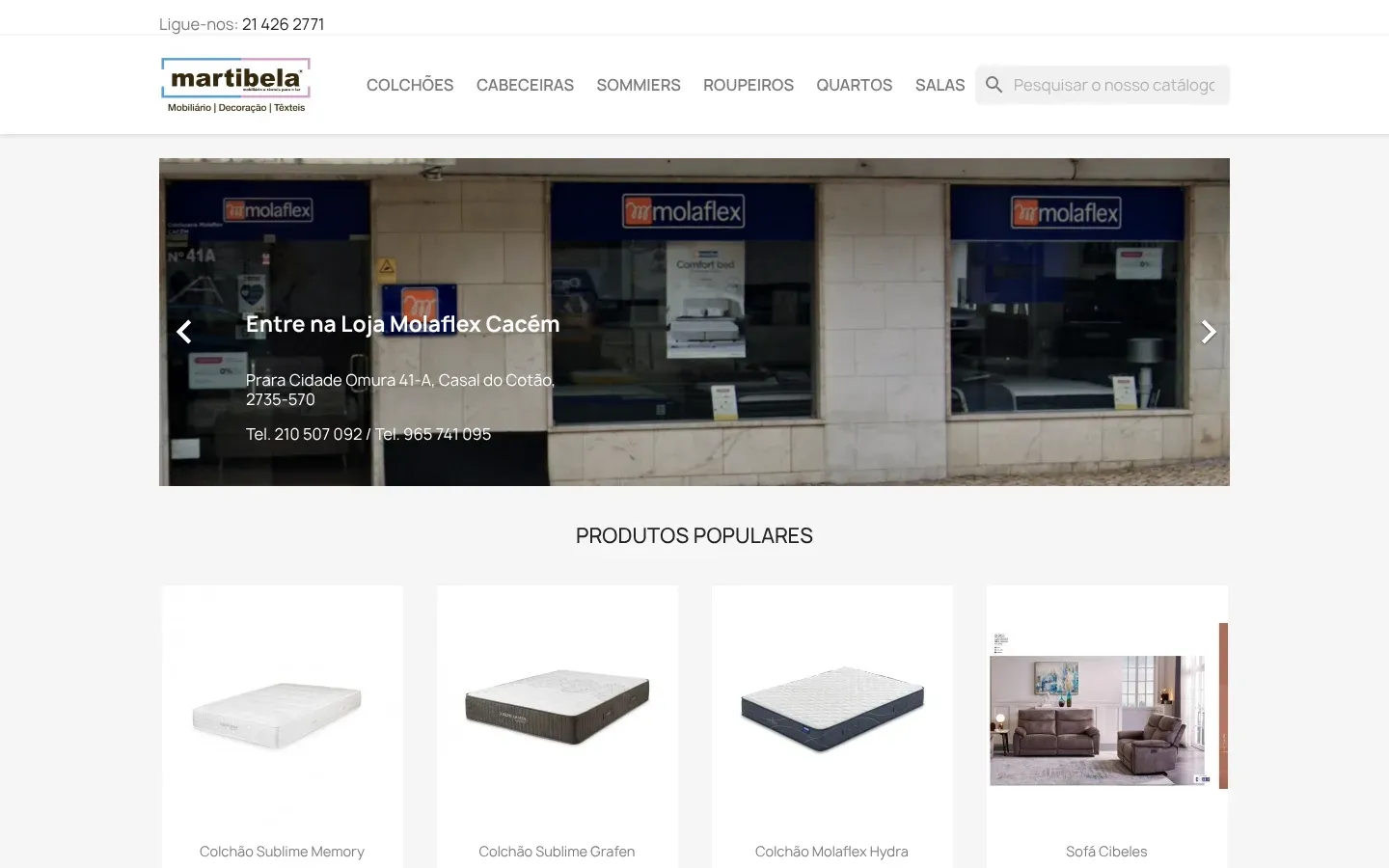
Martibela is a furniture and mattress retailer in Agualva-Cacém with two stores. The PrestaShop shop combines a full catalogue with click and collect and free delivery and installation in the Lisbon district above a minimum order value.
Agualva-Cacém, Portugal
Furniture and mattress retailer
Often, as a second channel. Marketplaces bring buyers you would not reach yourself, in exchange for a commission per sale, and they expect good product data, reliable stock and quick dispatch. Start with your own shop or catalogue so the product data is right, then add the marketplace that suits the category, such as Worten or Leroy Merlin for furniture and home.
Not always, but it needs an online catalogue. Most customers check online before visiting a store. Whether to add checkout depends on the products: small items sell well online, while furniture and mattresses often sell best through click and collect or a visit after browsing.
The one that fits your catalogue and how you work. PrestaShop suits many European retailers and gives you full control; Shopify is simpler to run with a monthly fee. A custom shop is rarely worth it for a small catalogue.
Since 28 June 2025 it applies to online shops selling to consumers, with an exemption for micro-enterprises providing services, meaning fewer than ten people and no more than €2 million in turnover. Even if you are exempt, an accessible shop is easier for everyone to use.
Tell us about your business. You get a free, no-obligation proposal from whoever would do the work, with an honest view of what to fix first.
Working with small businesses in Portugal since 2019.